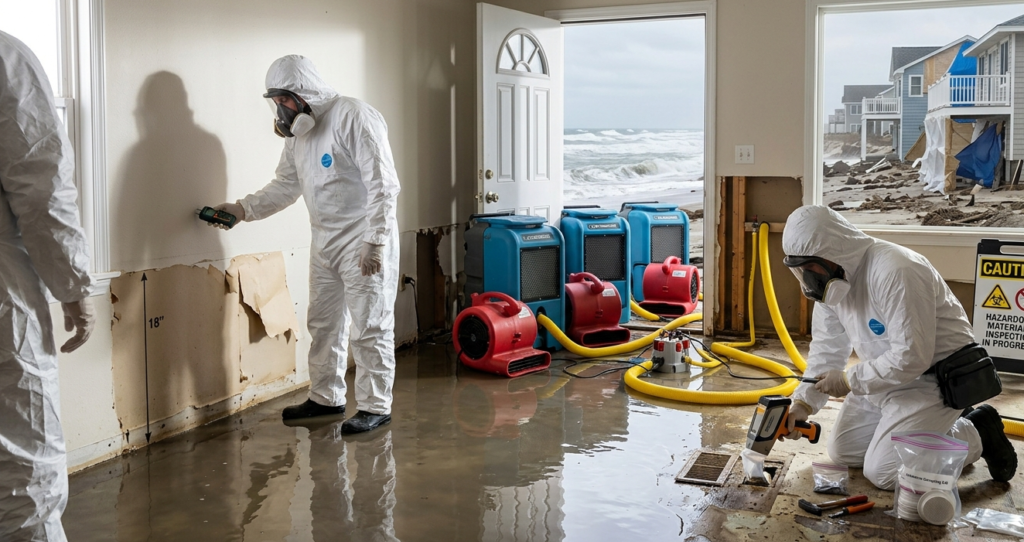
When a hurricane or tropical storm floods a home along the East Coast, the immediate focus is on standing water and structural damage. But in older properties – and the East Coast has an enormous inventory of pre-1980 construction – the floodwater itself can activate a second category of hazard that most homeowners never anticipate: disturbed asbestos and lead.
These aren’t abstract risks. Coastal flooding events are among the most disruptive scenarios for legacy building materials because they combine physical deterioration (water softening adhesives and substrates) with urgency that pushes remediation timelines faster than proper safety protocols can accommodate.
How Floodwater Activates Hazardous Materials
Asbestos-containing materials (ACMs) that have been safely encapsulated in a structure for decades become dangerous when disturbed. Flooding disturbs them in several ways:
- Sustained water contact causes vinyl floor tiles to delaminate from subfloor, breaking up the adhesive layer and physically fragmenting the tile
- Waterlogged drywall joint compound – which in pre-1977 construction frequently contained asbestos – becomes friable as it deteriorates
- Pipe insulation on older hydronic heating systems, once wet, softens and crumbles
- Ceiling textures loosen and fall when saturated from above
Lead is activated differently. In homes with lead-based paint (pre-1978 construction), floodwater accelerates paint deterioration — peeling, bubbling, and chalking — that releases lead dust onto every horizontal surface in the affected area. Children and pregnant women face the highest risk from ingestion and inhalation exposure.
According to the EPA’s Lead and Copper Rule, lead exposure from deteriorated paint remains the leading source of childhood lead poisoning in the United States – and post-flood renovation is one of the highest-risk scenarios for unintentional exposure.
The East Coast Exposure Map
The East Coast housing stock is among the oldest in the country. States from Maine to Florida contain millions of residential structures built before federal asbestos and lead regulations took effect. The risk is not uniformly distributed – it clusters in:
- Pre-war urban housing stock in the Northeast (New York, New Jersey, Massachusetts)
- Mid-century suburban builds throughout the Mid-Atlantic
- Older coastal resort and retirement communities throughout the Southeast
In Florida specifically, communities developed during the post-war boom (1945–1975) along the Atlantic coast carry a high prevalence of both ACMs and lead paint in original construction. Volusia County — home to cities like Daytona Beach – experienced significant residential development during this period. When tropical storm flooding hits these properties, the hazardous material risk is real and immediate.
Restoration professionals handling flood damage cleanup Daytona Beach in pre-1980 homes routinely encounter this combined scenario and should be equipped to pause demolition, test, and coordinate with licensed abatement contractors before proceeding.
What You Should Do Immediately After Flooding
If your home was built before 1980 and has taken on floodwater:
- Do not begin tearing out flooring, walls, or ceilings before testing suspect materials
- Keep children and pregnant household members out of the structure until testing is complete
- If you can see deteriorated ceiling texture, delaminated floor tiles, or crumbling pipe insulation – treat it as suspect ACM until proven otherwise
- Document the affected materials with photos before any remediation begins – your insurer will need this
- Engage a licensed asbestos and lead inspector to take bulk samples before demolition proceeds
The AHERA-accredited building inspector program sets the certification standard for asbestos inspectors – always verify your inspector’s credentials before engaging them.
Coordinating Abatement and Water Damage Restoration
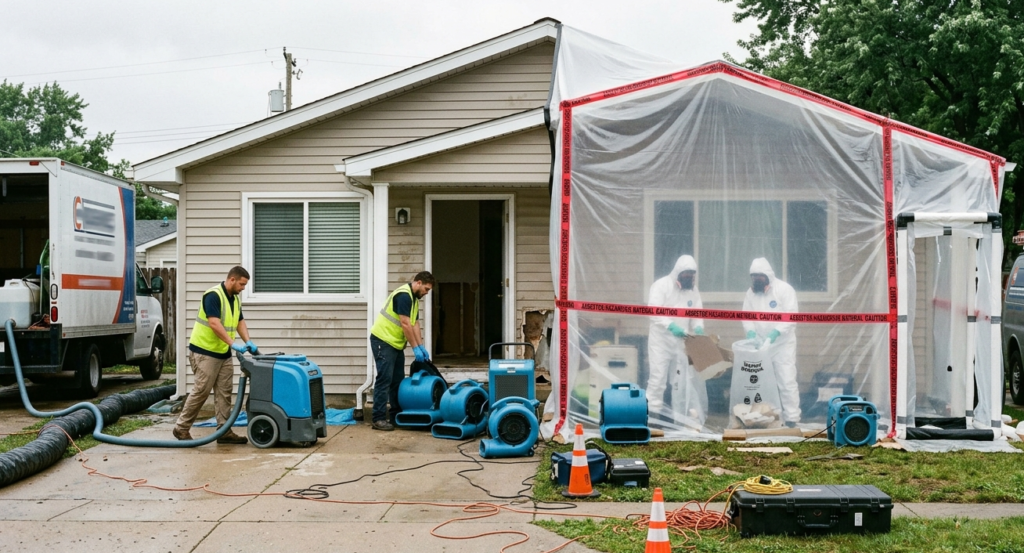
The practical challenge of combined flood + hazmat events is sequencing two separate contractor types with competing timelines. Water damage contractors want to extract and dry as fast as possible. Abatement contractors need to work in contained, controlled conditions that slow everything down.
The resolution is containment-first: the water damage contractor extracts standing water and sets drying equipment in non-affected areas while the hazmat inspection and abatement happens in the affected zone. This requires clear communication and a project coordinator – ideally a general contractor or restoration project manager – who can manage both work streams simultaneously.
For East Coast properties with storm damage, this coordination is not an edge case. It’s a standard feature of restoration in coastal markets with significant older housing stock.
Documentation and Regulatory Compliance
Asbestos abatement in a post-flood scenario must comply with:
- EPA NESHAP (National Emission Standards for Hazardous Air Pollutants) – applies to renovations and demolitions involving ACMs
- State-level abatement licensing requirements (vary by state; Florida requires licensed mold remediators and asbestos contractors separately)
- OSHA 1926.1101 for construction work involving asbestos
Your abatement contractor should provide a final clearance letter and air quality test results before any rebuild work commences. Keep these documents with your property records – they are material to future sales and permits.
East Coast storm flooding is not just a water damage event in older homes. It is a hazardous materials event that requires testing, proper abatement sequencing, and licensed contractors before standard restoration can proceed. The homeowners who understand this before demolition starts are the ones who avoid regulatory violations, protect their families, and preserve their insurance claims.
Leave a Reply