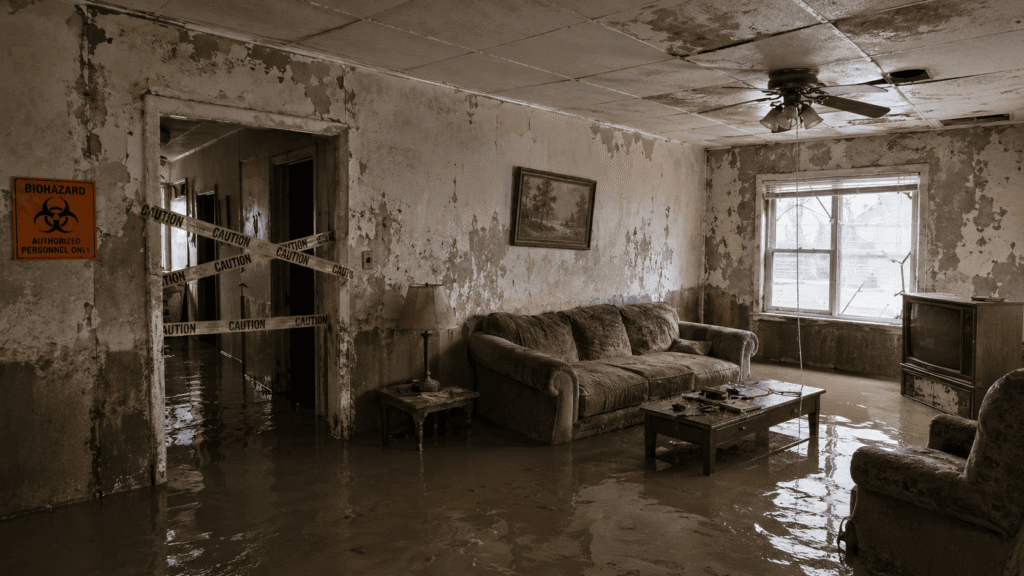
Every year, thousands of homeowners across the United States deal with the aftermath of flooding burst pipes, storm surges, and hurricane-driven floodwaters soaking through walls, floors, and ceilings. The instinct is to act fast: rip out wet drywall, pull up soggy flooring, tear out waterlogged insulation. Get dry. Get clean. Move on.
But in homes built before 1980, that urgency can create a second, far more dangerous crisis airborne asbestos exposure.
According to the U.S. Census Bureau’s 2019 American Community Survey, nearly half of all homes still standing in the United States were built before 1980 the unofficial cutoff for peak asbestos use in residential construction. That means roughly 30 million homes across the country still contain asbestos-laden materials in their walls, floors, ceilings, and pipes. When floodwater hits those materials, the science of what happens next is deeply alarming.
This guide explains exactly how flooding exposes asbestos, which materials are at highest risk, what homeowners must do before touching anything, and why calling your water damage restoration contractor and a certified asbestos inspector at the same time could be the most important decision you make after a flood.
Why Flooding Is One of the Most Dangerous Triggers for Asbestos Exposure
Asbestos in good condition intact, undisturbed, sealed behind walls poses very little immediate risk. The danger begins the moment it becomes friable: broken down, crumbled, or degraded to the point where microscopic fibers can be released into the air and inhaled.
Flooding creates the perfect conditions for exactly that to happen.
When floodwater saturates a home, it doesn’t just wet the surface of materials it penetrates the binders and cements that hold asbestos fibers in place within composite building materials. As these binders weaken and break down, asbestos fibers can separate from the surrounding material and become airborne once the structure begins to dry.
There is a second, less obvious hazard that makes flood scenarios uniquely dangerous: asbestos fibers are waterproof. Unlike many particles that sink and settle when wet, asbestos fibers can float on the surface of standing water. When that water is disturbed by a person walking through it, a pump being operated, or a cleanup crew pulling materials out, those fibers become airborne and can be inhaled.
The U.S. Environmental Protection Agency (EPA) identifies several asbestos-containing materials commonly found in flooded homes, including acoustic ceiling tiles, vermiculite attic insulation, floor tiles, and pipe insulation all of which are at direct risk when floodwater enters a structure.
The Lake Charles Example: Why Gulf Coast Homeowners Are at Particular Risk
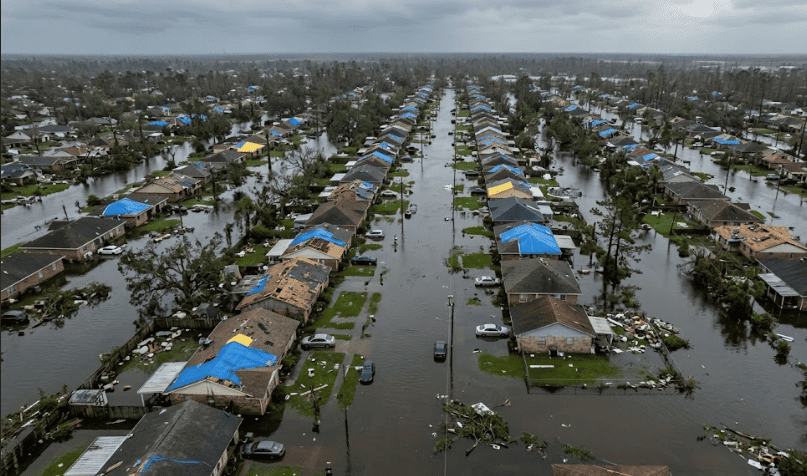
The connection between flooding and hidden asbestos isn’t theoretical. It played out in real time across Southwest Louisiana when Hurricane Laura a Category 4 storm with 150 mph winds made direct landfall near Lake Charles on August 27, 2020. An estimated 46,000 homes were damaged or destroyed in the storm. Weeks later, before those homes were fully assessed, Hurricane Delta struck the same region, flooding structures that were still in disarray from Laura’s damage.
Hurricane Laura alone caused an estimated $17.5 billion in damage in Louisiana, generating 175,160 insurance claims the vast majority of them residential. Skyscrapers lost their windows. Roofs were peeled away. Walls were opened to the sky.
Many of the homes affected were decades old built during the postwar construction boom of the 1950s and 1960s, when asbestos was a standard component of everything from pipe lagging to floor adhesive to popcorn ceiling texture. When Laura’s storm surge and wind-driven rain tore into those structures, it didn’t just cause water damage. It almost certainly disturbed asbestos-containing materials in thousands of homes simultaneously.
Homeowners returning to flood-damaged properties in Lake Charles and across Southwest Louisiana faced and continue to face a situation where the urgency of getting dry and getting repaired had to be carefully balanced against the risk of unseen hazardous material exposure. For professional water damage restoration in Lake Charles, coordinating that process correctly water extraction first, then certified asbestos inspection before any demolition work begins is critical to protecting both workers and families.
Which Materials Are Most Likely to Contain Asbestos in a Flooded Home?
If your home was built before 1980, asbestos may be present in more places than you expect. The following materials are among the most commonly affected during flood events:
1. Vinyl Floor Tiles and Floor Adhesive (Mastic)
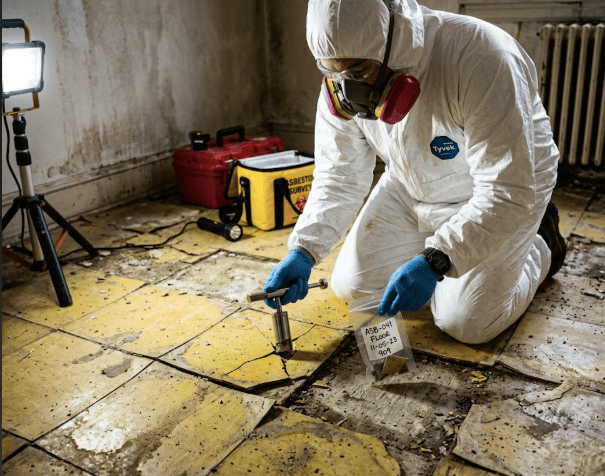
One of the most widespread uses of asbestos in residential construction was in 9-inch and 12-inch vinyl floor tiles, as well as the black adhesive (mastic) used to bond them to subfloors. Flooding causes these tiles to swell, separate, and crack precisely the kind of disturbance that releases fibers. Do not attempt to pull up vinyl flooring in a pre-1980 home without asbestos testing first.
2. Pipe and Duct Insulation
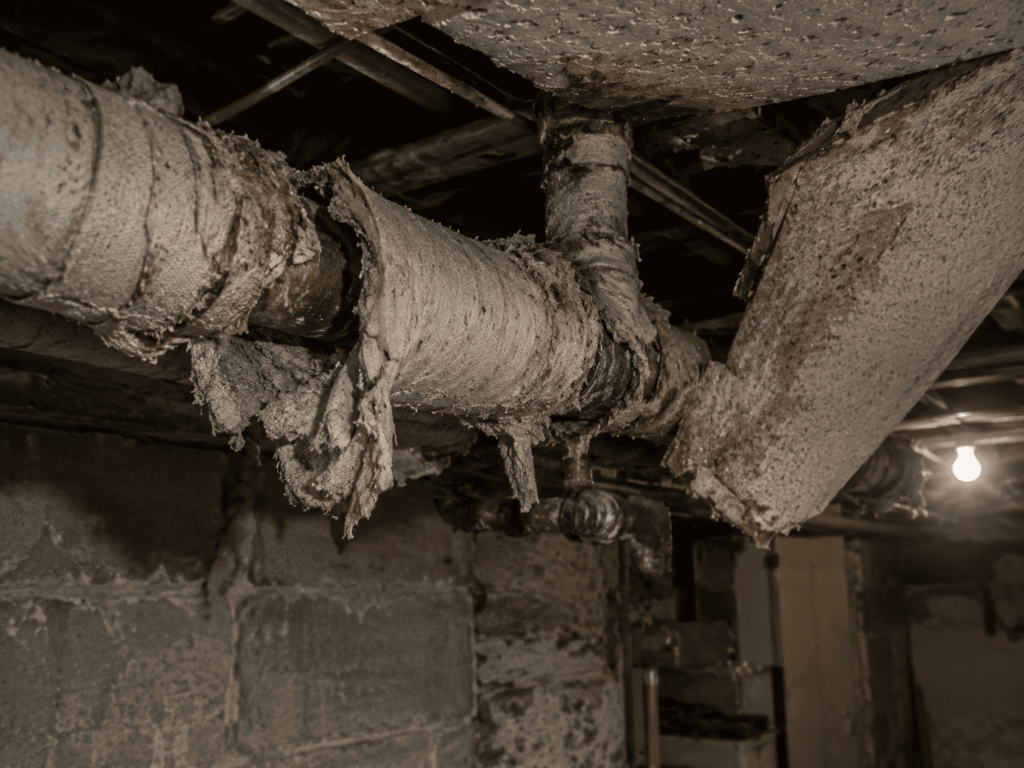
Insulation wrapping around hot water pipes, heating ducts, and boiler systems was frequently made with asbestos-containing materials. When pipes are surrounded by floodwater, this insulation absorbs moisture, swells, and begins to deteriorate. It then dries in a degraded, friable state releasing fibers into the air of any living space nearby.
3. Ceiling Tiles and Acoustic Ceiling Material (Popcorn Ceilings)
Acoustic ceiling tiles used in basements, living areas, and offices from the 1950s through the 1970s frequently contained asbestos. Popcorn ceiling texture applied before 1978 also commonly contained asbestos. Floodwater rising to ceiling level or a roof breach allowing water to saturate ceiling materials from above can damage these materials and trigger fiber release.
4. Drywall Joint Compound (Texture Compound)
The compound used to tape and texture drywall joints in homes built before the late 1970s often contained asbestos. When drywall gets wet in a flood and the joint compound softens, any subsequent demolition tearing out a wall to check for mold can release fibers into the air. This is one of the most dangerous scenarios for unprotected flood restoration crews.
5. Vermiculite Attic Insulation
Gray-brown or silver-gold pebble-like attic insulation known as vermiculite was widely sold under the brand name Zonolite. The EPA has confirmed that the majority of vermiculite sold in the U.S. before 1990 was contaminated with asbestos from the Libby, Montana mine. Storm damage opening up an attic, or floodwater infiltrating attic spaces, can disturb vermiculite and release fibers into the home below.
6. Roofing Shingles and Siding
Asbestos-cement shingles were commonly used on both roofs and exterior siding well into the 1970s. Hurricane-force winds and storm damage that fractures or displaces this material create a fiber release risk both inside and outside the home.
The Biology of Why This Matters: What Asbestos Does to the Body
The reason asbestos has been so tightly regulated and why the EPA states there is no known safe level of exposure comes down to what inhaled fibers do once they enter the lungs.
Asbestos fibers are microscopic and needle-like. Once inhaled, they cannot be expelled by the body’s normal clearing mechanisms. Instead, they embed in lung tissue and the pleural lining surrounding the lungs, where they remain permanently, triggering chronic inflammation.
Decades of low-level exposure in buildings or a single significant exposure event during unprotected flood cleanup can contribute to:
- Mesothelioma: A rare, aggressive cancer of the lining of the lungs, abdomen, or heart. It carries a median survival of 12–21 months after diagnosis. There is no cure.
- Asbestosis: Irreversible scarring of lung tissue that progressively impairs breathing.
- Lung cancer: Risk is dramatically elevated in asbestos-exposed individuals who also smoke.
- Pleural plaques and thickening: Chronic scarring of the lung lining that causes shortness of breath and reduced quality of life.
The latency period the time between exposure and diagnosis is typically 20 to 50 years. This means someone exposed during flood cleanup today may not develop symptoms until the 2040s or 2050s. It also means there is no immediate warning sign to tell you exposure has occurred. The risk is entirely invisible in the moment.
The Correct Order of Operations After a Flood And Why Most Homeowners Get It Wrong
The natural instinct after a flood is to act in this order:
- Pump out water
- Rip out wet materials
- Dry the structure
- Call professionals
The correct order, especially in any home built before 1980, is:
- Pump out water (emergency water extraction only)
- Stop call a certified asbestos inspector
- Receive inspection results and safe abatement plan
- Proceed with demolition and drying under safe conditions
The reason most homeowners skip Step 2 is urgency. Mold begins growing within 24 to 48 hours of a water event, and insurance adjusters often push for rapid remediation. But the EPA’s guidelines for catastrophic emergency situations involving asbestos are clear: demolition of flood-damaged structures that may contain asbestos must be handled by trained and certified personnel, and demolition debris must be properly handled and disposed of as asbestos-containing waste when applicable.
Skipping an asbestos inspection before demolition doesn’t just risk personal exposure it can create liability for contractors who disturb regulated asbestos-containing materials without following NESHAP (National Emissions Standards for Hazardous Air Pollutants) protocols, which the EPA strictly enforces.
What a Certified Asbestos Inspector Does During an Emergency Flood Response
A certified asbestos inspector not a general contractor, not a restoration crew, and not a home inspector is the only qualified professional who can legally assess and sample suspect asbestos-containing materials during or after a flood event.
At AccuTest Asbestos Services, our emergency asbestos response process in a post-flood scenario includes:
Rapid On-Site Assessment: Our certified inspectors arrive to visually assess all affected materials, identify which are suspect asbestos-containing based on construction era, material type, and condition, and prioritize areas for sampling before any demolition is attempted.
Bulk Material Sampling: Samples are collected from damaged flooring, ceiling tiles, insulation, joint compound, and any other suspect materials using proper PPE and containment protocols. Samples are submitted to a certified laboratory for PLM (Polarized Light Microscopy) analysis the standard required by EPA and state regulators.
Air Sampling (where necessary): If materials have already been disturbed before our arrival as is common when homeowners begin DIY cleanup we perform air sampling to determine whether fibers are present at elevated concentrations in the structure.
Clearance Testing: After any required abatement work is completed, we perform post-abatement clearance air testing to certify that asbestos fiber levels have returned to safe levels before a restoration contractor or mold remediation team re-enters the space for demolition and drying work.
Inspection Report: We provide a formal written report suitable for your insurance claim, documenting all findings, sample results, and recommendations a document that can significantly support the asbestos-related portions of a water damage insurance claim.
This coordinated approach is why restoration companies in flood-prone areas increasingly ask homeowners to have an asbestos inspection completed before demolition begins. In a city like Lake Charles, where thousands of homes carry the legacy of hurricane damage to aging structures, the need for this coordination is especially acute.
What to Do Right Now If Your Home Has Flooded
If your home has flooded from a hurricane, a burst pipe, a sewage backup, or any other cause and was built before 1980, follow these immediate steps:
Do:
- Keep activity in flooded areas to an absolute minimum until you know what you’re dealing with
- Operate pumps and water extraction equipment from outside the affected area when possible
- Keep any damaged materials wet if they must be moved (wet materials release fewer fibers)
- Contact a certified asbestos inspector before authorizing any demolition work by any contractor
- Notify your insurance company that you are having an asbestos inspection performed this protects your claim
Do Not:
- Vacuum or sweep debris in a flooded pre-1980 home (vacuums without HEPA filtration spread fibers)
- Allow contractors to begin pulling drywall, ceiling tiles, or flooring before an asbestos assessment
- Attempt to remove pipe insulation, floor tiles, or ceiling tiles yourself
- Allow children or elderly family members back into a flooded home until it has been assessed
A Note on Pre-Renovation Inspections for Non-Emergency Situations
If your home was not affected by a flood but you are planning a renovation a kitchen remodel, bathroom update, or any project that disturbs walls, floors, or ceilings in a pre-1980 home a pre-renovation asbestos inspection is equally important and legally required in many states before demolition work begins.
The distinction between a pre-renovation inspection and an emergency flood inspection is primarily one of urgency and scope but both serve the same essential purpose: ensuring that asbestos-containing materials are identified and managed safely before work that might disturb them begins.
Conclusion: The Hidden Hazard Hiding in Plain Sight
Flooding is frightening. The damage is visible, immediate, and emotionally overwhelming. The instinct to act fast to tear out, dry out, and move on is entirely understandable.
But in a pre-1980 home, the most dangerous thing you can do after a flood is assume that the visible water damage is the only problem.
Asbestos-containing materials are in an estimated 30 million American homes. Floodwater weakens the binders that hold asbestos fibers in place. And once those fibers become airborne during an unprotected cleanup, there is no way to know the exposure has occurred until, potentially decades later, a diagnosis reveals the consequences.
The right call before a contractor tears out a single piece of drywall is to have a certified asbestos inspection performed. It protects your health. It protects your family. It protects restoration crews. And it protects your insurance claim.
If your home has been affected by flooding, contact AccuTest Asbestos Services for an emergency asbestos inspection. If you are in Southwest Louisiana and need immediate professional water damage restoration services in Lake Charles, coordinate your restoration contractor alongside your asbestos inspection these two processes must work together, not in sequence after the damage is done.
Your home can be saved. But only if the hidden hazards are identified first.
About AccuTest Asbestos Services: AccuTest Asbestos Services is a state-certified asbestos inspection and testing company based in Johnston, Rhode Island. Our licensed inspectors provide residential and commercial asbestos testing, air sampling, emergency response inspections, and pre-renovation surveys throughout Rhode Island and New England. Call us at (844) 334-7395 or get a free quote online.
Leave a Reply