
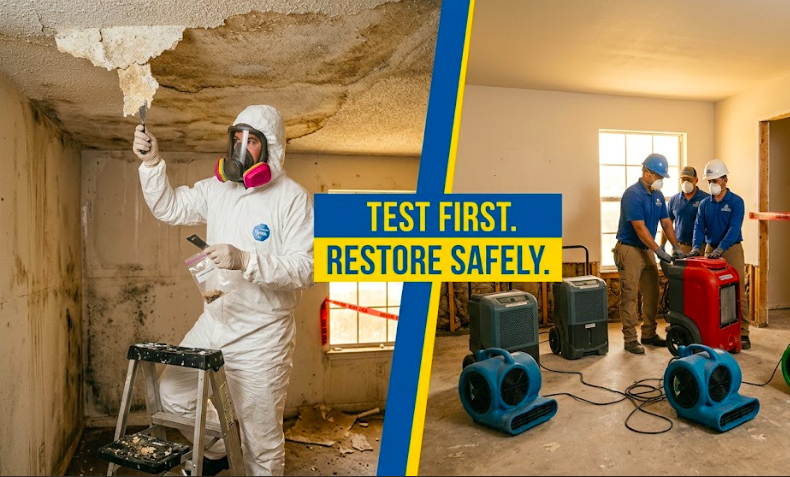
Why McAllen Homeowners Face a Unique Asbestos Risk
McAllen, Texas, sits in the heart of the Rio Grande Valley a region that experienced rapid residential and commercial construction growth from the 1950s through the 1980s. During those decades, asbestos was one of the most widely used building materials in America. It was cheap, durable, fire-resistant, and considered a wonder material by builders and architects alike. The result? A significant portion of the homes, schools, and commercial properties across Hidalgo County including McAllen, Mission, Edinburg, Pharr, and Weslaco were built with asbestos-containing materials.
What makes the situation more pressing in McAllen is the local climate. The Rio Grande Valley experiences extreme heat, high humidity levels, and severe weather events including tropical storms, flash flooding from the Rio Grande, and intense monsoon-season rainfall. All of these climate factors accelerate the degradation of building materials. And when older materials break down, crack, or get saturated with water, the asbestos fibers they contain can be released into the air your family breathes every day.
1980 Most homes built before this year may contain asbestos
3,000+ Asbestos-related cancer deaths in the U.S. each year
24–72 hrsStandard lab turnaround time for asbestos samples in Texas
$300–$500 Typical cost of pre-restoration asbestos inspection
Add in the fact that McAllen’s older residential neighborhoods including areas near downtown McAllen, Sharyland, and the historic colonias along the border have higher concentrations of pre-1980 construction, and it becomes clear that asbestos is not a hypothetical risk here. It’s a real, present, and pressing concern that every homeowner dealing with water damage must address before calling in a restoration crew.
What Is Asbestos and Where Is It Found After Water Damage?
Asbestos is a naturally occurring silicate mineral that was incorporated into thousands of building products throughout the 20th century due to its exceptional fire resistance, insulating properties, and tensile strength. There are six recognized types of asbestos, but chrysotile (white asbestos) and crocidolite (blue asbestos) are the most commonly encountered in residential construction.
When asbestos-containing materials remain intact and undisturbed a condition professionals call “non-friable” they generally pose minimal risk. The danger arises when those materials are disturbed, damaged, broken, cut, drilled, sanded, or saturated with water. In that state, the material becomes “friable,” releasing microscopic fibers that become airborne and can be inhaled deep into the lungs. Once inhaled, those fibers can remain lodged in lung tissue for decades, potentially causing mesothelioma, asbestosis, and lung cancer diseases with no cure and long latency periods of 20 to 50 years.
Common Asbestos-Containing Materials in McAllen Homes
After a water damage event whether from a burst pipe, roof leak, flooding, or storm surge the following building materials in older McAllen homes are most likely to contain asbestos and pose an elevated risk:
- Popcorn or textured ceilings: Extremely common in Texas homes built from the 1950s to 1978; often contain up to 10% chrysotile asbestos
- Vinyl floor tiles and mastic adhesives: 9″×9″ floor tiles installed before 1980 and the black adhesive (mastic) beneath them frequently test positive for asbestos
- Drywall and joint compound: Joint compound (mud) used to tape seams in walls and ceilings was a common asbestos application through the 1970s
- Pipe insulation and duct wrap: Basement and crawl space piping, as well as HVAC duct insulation, frequently used asbestos-containing materials in older construction
- Roof shingles and felt paper: Asphalt roof shingles and the felt underlayment beneath them were commonly manufactured with asbestos
- Attic insulation: Vermiculite insulation, which may contain tremolite asbestos, was widely sold through the 1990s under the brand name Zonolite
- Exterior stucco and siding: Stucco finishes and certain fiber cement siding products used in Texas construction before 1980 may contain asbestos
- Plaster walls and ceilings: Traditional lath-and-plaster construction sometimes incorporated asbestos in the plaster mix
Critical Warning for McAllen Homeowners
Water saturation dramatically increases the likelihood that asbestos fibers will be released from damaged materials. If your home sustained flooding, roof damage, or plumbing leaks and was built before 1985 assume asbestos is present until a licensed inspector confirms otherwise. Do not begin demolition, drywall removal, or flooring replacement without testing first.
Before or After? The Definitive Answer for McAllen Property Owners
This is the central question homeowners ask when they’re standing in a flooded kitchen or staring at water-stained drywall, and the answer is unambiguous: test for asbestos before restoration work begins.
Here’s exactly why the “before” approach is non-negotiable:
| Scenario | Testing BEFORE Restoration | Testing AFTER Restoration Starts |
|---|---|---|
| Worker safety | ✓ Workers know what they’re handling and use proper PPE | ✗ Workers may already have been exposed to airborne fibers |
| Family health | ✓ Family can be safely evacuated if asbestos is found | ✗ Family may have inhaled fibers during early restoration |
| Legal compliance | ✓ Fully compliant with Texas DSHS and EPA regulations | ✗ Potential fines and legal liability for non-compliance |
| Project cost | ✓ Containment and abatement planned upfront | ✗ Work halted mid-project; emergency abatement costs far more |
| Insurance claims | ✓ Clean documentation supports insurance coverage | ✗ Insurer may dispute claims if proper protocols weren’t followed |
| Restoration timeline | ✓ No surprise delays once work begins | ✗ Project shutdown while waiting for abatement clearance |
| Property resale value | ✓ Documented clean bill of health increases buyer confidence | ✗ Unresolved or undisclosed asbestos creates disclosure liability |
Some homeowners wonder: “What if the water damage is minor? Can’t I just start drying things out and test later?” The answer is no and here’s the practical reason. Water damage restoration almost always involves removing or disturbing building materials. Even simple drying work may require opening walls to place drying equipment, removing baseboards, pulling up wet flooring, or cutting out sections of drywall. Any of these actions can disturb ACMs and release fibers. The only safe approach is to know what you’re dealing with before a single wall is opened.
How Water Damage Triggers Asbestos Hazards in RGV Homes
The Rio Grande Valley’s climate creates a perfect storm of conditions that increase asbestos risk during and after water damage events. McAllen receives an average of 22 inches of rainfall annually, with the majority falling during intense summer storms that can overwhelm drainage systems and cause rapid interior flooding. Hurricane-strength tropical systems moving up the Gulf of Mexico have historically impacted South Texas with severe flooding. When this rainfall infiltrates a home, it does far more than damage property it activates dormant asbestos hazards in ways that many homeowners don’t anticipate.
Water Damage Mechanisms That Release Asbestos Fibers
Roof damage and ceiling water intrusion: When storm damage compromises a roof, water penetrates ceiling materials. If that ceiling is a textured popcorn ceiling containing asbestos extremely common in McAllen homes from the 1960s and 1970s water saturation causes the material to soften, sag, and eventually crumble. As the material breaks down, it releases asbestos fibers directly into your living space.
Pipe bursts and wall cavity flooding: Plumbing failures that flood wall cavities can soak drywall, insulation, and joint compound. In pre-1980 construction, both the drywall compound and the insulation within the wall cavity may contain asbestos. When restoration crews open those walls to dry them out and replace the drywall, they can release concentrated amounts of asbestos fibers in a closed indoor environment.
Flooring damage and subfloor exposure: Flooding that damages flooring often requires removal of the affected materials. In older McAllen homes, layers of vinyl floor tile each potentially containing asbestos may sit beneath carpet or newer flooring. The 9″×9″ and 12″×12″ vinyl tiles installed from the 1950s through 1980 are a well-known asbestos risk, as is the black tar-based adhesive that holds them to the concrete slab.
McAllen-Specific Climate Risk Factor
McAllen’s high humidity averaging 70–80% relative humidity during summer months accelerates the deterioration of building materials. Homes in the Rio Grande Valley that have sustained even minor water intrusion repeatedly over the years are at heightened risk of having degraded asbestos-containing materials that can release fibers more easily than in drier climates. If your home has had repeated roof leaks or flooding events, this concern is amplified.
HVAC system flooding: When water enters an HVAC system common after severe flooding duct insulation materials, which frequently contained asbestos in older systems, can be compromised. Running an HVAC system with damaged asbestos-containing duct insulation can distribute fibers throughout every room in the house.
Texas Asbestos Laws and McAllen Regulations You Must Know
Understanding the legal framework that governs asbestos in Texas is not optional it’s essential for any McAllen property owner navigating water damage and restoration. Texas has a comprehensive set of asbestos regulations administered primarily by the Texas Department of State Health Services (TDSHS), with additional oversight from the Texas Commission on Environmental Quality (TCEQ) and federal bodies including the EPA and OSHA.
Texas Senate Bill 509
Texas Senate Bill 509, which took effect for permits issued on or after January 1, 2002, requires municipalities to verify that an asbestos survey has been conducted before issuing renovation or demolition permits for public or commercial buildings. For commercial property owners in McAllen, this means an asbestos survey is a legal prerequisite before any permitted renovation work can begin including water damage restoration that involves structural modifications.
TDSHS Licensing Requirements
In Texas, any inspector who collects asbestos samples for regulatory purposes must hold a valid TDSHS license. This is not a suggestion it’s a legal requirement. When you’re dealing with water damage in a McAllen property and need an asbestos inspection, verify that the inspector holds current TDSHS accreditation. Using an unlicensed inspector not only creates legal liability but also means the results may not be accepted by insurers or regulators.
Additionally, any asbestos abatement work the actual removal of confirmed asbestos-containing materials must be performed by a TDSHS-licensed asbestos abatement contractor. Self-abatement or hiring an unlicensed contractor to remove asbestos is illegal in Texas and exposes property owners to significant fines, civil liability, and potential criminal penalties.
Single-Family Homeowner Exemptions And Why They Don’t Protect You
Texas regulations provide that single-family homes are generally exempt from the mandatory asbestos survey requirement. However, this exemption is frequently misunderstood as meaning that asbestos testing isn’t necessary in a residential setting. That interpretation is incorrect and potentially dangerous. The exemption means the government won’t force you to test not that testing is inadvisable or unnecessary. The health risk from disturbing asbestos-containing materials in your McAllen home is identical whether or not a legal mandate applies. The microscopic fibers don’t distinguish between regulated and unregulated environments.
Texas Disclosure Law
Texas law requires sellers to disclose known material defects in a property, including the known presence of asbestos. If you sell your McAllen home after a water damage restoration without documenting asbestos testing and abatement, you may face legal liability if asbestos is discovered by the buyer after closing. Pre-restoration testing and documented abatement protects your investment and your legal standing.
The Asbestos Testing Process: What McAllen Homeowners Should Expect
Understanding what professional asbestos testing involves helps you ask the right questions, evaluate your options, and move forward with confidence after a water damage event. The process is more straightforward than many homeowners expect, and it should not significantly delay your restoration timeline when coordinated properly.
Initial Property Assessment
A TDSHS-licensed asbestos inspector visits your McAllen property to conduct a visual walkthrough. They identify suspect materials those that could reasonably contain asbestos based on the age of construction, material type, and appearance. They’ll evaluate water-damaged areas specifically to identify which materials need sampling before restoration can proceed.
Controlled Sample Collection
The inspector collects small physical samples from suspect materials using safe methods that minimize fiber release. Each sample is collected using wet techniques and sealed immediately to prevent airborne contamination. In a typical water-damaged home, the inspector may collect samples from drywall, flooring materials, ceiling texture, insulation, and pipe wrap.
Accredited Laboratory Analysis
Samples are submitted to an accredited laboratory for analysis using Polarized Light Microscopy (PLM) or Transmission Electron Microscopy (TEM). Standard turnaround time in Texas is 24 to 72 hours; rush service is typically available for same-day or next-day results when water damage restoration cannot be delayed.
Results and Written Report
You receive a written report documenting which materials were sampled, the asbestos content percentage of each sample, and practical recommendations for next steps. A clean report clears the way for restoration to proceed. A positive result triggers the abatement process before restoration can safely begin.
Abatement (If Required)
If asbestos-containing materials are confirmed, a TDSHS-licensed abatement contractor safely removes or encapsulates the ACMs under full containment conditions with negative air pressure and HEPA filtration. After abatement is complete, clearance air monitoring confirms the area is safe before containment is removed and restoration begins.
Restoration Proceeds Safely
With asbestos confirmed absent or properly abated, your water damage restoration team can safely begin the full scope of structural drying, demolition, and reconstruction work without risk to workers or your family.
The Critical Connection Between Asbestos Testing and Water Damage Restoration in McAllen
Asbestos testing and water damage restoration are not separate processes that happen sequentially and independently they are deeply interconnected, and the quality of one directly affects the safety and success of the other. This is why property owners in McAllen need both a certified asbestos inspector and a professional water damage restoration company working from a coordinated plan.
When you work with an experienced water damage restoration company in McAllen, TX, they will immediately recognize the need for asbestos assessment before their crews begin demolition work particularly in homes and commercial buildings constructed before 1985. A professional restoration company understands that the liability of exposing their workers to asbestos without proper testing is both a safety violation and a legal risk. Reputable companies in the McAllen area will coordinate with licensed asbestos inspectors and, if necessary, pause restoration activities while abatement is completed.
What to look for when coordinating restoration and asbestos testing in the Rio Grande Valley:
- Confirm that your restoration contractor asks about the age of your home and flags potential asbestos concerns before work begins
- Ensure the asbestos inspector is TDSHS-licensed and experienced with South Texas construction types including stucco exteriors and concrete slab foundations
- Request rush lab turnaround if water damage is severe same-day results are available and prevent extended delays
- Ask your restoration company about their protocol for encountering unexpected asbestos during demolition work
- Keep all documentation inspection reports, lab results, abatement records, and clearance monitoring for your insurance claim and future property disclosures
Dealing with Water Damage in McAllen?
Don’t let asbestos concerns add to your stress. Start with a professional water damage assessment from a team that understands South Texas properties and asbestos risk .Get Water Damage Help in McAllen →
The Real Cost Comparison: Testing Before vs. Discovering Asbestos Mid-Project
One of the most common reasons homeowners skip asbestos testing before water damage restoration is the assumption that it will delay the project or add unnecessary cost. The reality is the exact opposite skipping testing is almost always far more expensive than testing upfront.
Upfront Testing Costs in McAllen, TX
A professional asbestos inspection and sampling in McAllen typically costs between $300 and $600 for a standard residential property, depending on the size of the home and the number of suspect materials. Rush laboratory analysis adds $75 to $150 per sample. In the context of water damage restoration which commonly runs from $5,000 to $50,000 depending on severity this is a minor expense that provides significant protection.
The Cost of Discovering Asbestos Mid-Restoration
When asbestos is discovered after restoration work has already begun, the financial consequences multiply rapidly. Work must stop immediately while the site is secured. An emergency asbestos inspection must be arranged, potentially at premium pricing. The abatement contractor must now work around partially demolished spaces, which increases labor costs. Air clearance testing must confirm the entire work area is safe before restoration can resume. Depending on the scope, a mid-project asbestos discovery can add $5,000 to $20,000 or more in unexpected costs a fraction of which would have been spent on proactive testing.
Cost-Benefit Summary for McAllen Homeowners
Pre-restoration asbestos testing in McAllen typically costs $300–$600. The cost of an emergency stop-work order, unplanned abatement, and project delays after asbestos is discovered mid-restoration can easily reach $10,000–$25,000. The arithmetic is clear: testing first is always the smarter financial decision, in addition to being the legally compliant and ethically responsible one.
Insurance Implications
Standard homeowners insurance in Texas covers sudden and accidental water damage, but asbestos abatement costs are often a coverage grey area. Some policies will cover abatement when it is directly tied to a covered water damage claim, while others exclude it explicitly. Documenting your asbestos testing both the initial inspection and any subsequent clearance monitoring provides the paper trail your insurer needs to process a claim. Without this documentation, you may find your claim disputed or denied.
Professional Asbestos Testing Services You Can Trust
If you’re a McAllen homeowner who has experienced water damage and needs professional asbestos testing before restoration can begin, it’s important to work with licensed, certified inspectors who understand the regulatory requirements and the specific building materials used in South Texas construction.
For homeowners and property managers looking for comprehensive asbestos testing, inspection, and abatement consultation services backed by certified professionals and accredited laboratory analysis, visit East Coast Asbestos Asbestos Testing & Inspection Services. Their team provides detailed asbestos surveys, material sampling, and actionable reports that give you everything you need to move forward with water damage restoration safely and compliantly.
Additionally, the U.S. Environmental Protection Agency’s Asbestos Guidance for Homeowners provides authoritative guidance on identifying asbestos risks, understanding when testing is necessary, and choosing qualified professionals a valuable reference for any McAllen homeowner navigating this process for the first time.
Frequently Asked Questions Asbestos Testing & Water Damage in McAllen
Q: My McAllen home was built in 1992. Do I still need asbestos testing before water damage restoration?
Homes built after 1980 have significantly lower asbestos risk, but it’s not zero. Some asbestos-containing materials particularly certain floor tiles, roofing materials, and vermiculite attic insulation continued to be used into the mid-1980s and, in limited cases, beyond. If your 1992 home used any salvaged, recycled, or surplus building materials, or if it contains materials you can’t positively identify as post-asbestos, testing is still advisable. Your inspector can quickly assess the risk and advise you on whether sampling is warranted.
Q: Can I test for asbestos myself using a home test kit?
DIY asbestos test kits are available, but they are not recommended for water damage situations in McAllen for several reasons. Collecting samples without proper technique can release fibers and create an exposure risk. DIY results are not accepted for legal or regulatory purposes in Texas. And critically, an untrained homeowner is likely to miss suspect materials or collect samples incorrectly, leading to false confidence. In a water damage scenario where disturbing materials is imminent a licensed inspector’s assessment is essential.
Q: How long does asbestos testing take? Will it delay my water damage restoration?
Standard lab turnaround for asbestos samples in Texas is 24 to 72 hours. Rush or same-day lab services are typically available at an additional cost. Coordinating asbestos testing and water damage response simultaneously where industrial drying equipment is deployed for non-suspect areas while samples are being analyzed can minimize overall project delays significantly. A well-coordinated response team in McAllen will manage these timelines efficiently.
Q: What happens if asbestos is found in my McAllen home after a flood?
If asbestos is confirmed, work in the affected areas stops until a TDSHS-licensed abatement contractor safely removes or encapsulates the ACMs. The abatement area is fully contained with negative air pressure and HEPA filtration. After abatement, clearance air monitoring verifies the space is safe. Once clearance is achieved, water damage restoration proceeds normally. The process adds time and cost, but it’s the legally required and health-responsible path forward.
Q: Is asbestos testing required for McAllen commercial properties?
Yes. For commercial and public buildings in McAllen, Texas Senate Bill 509 requires an asbestos survey before renovation or demolition permits are issued. Water damage restoration work that requires structural modifications opening walls, removing flooring, replacing ceiling materials typically requires a permit and therefore mandates an asbestos survey. Contact the City of McAllen Building Department and coordinate with a TDSHS-licensed inspector before work begins.
Q: Will my homeowners insurance cover asbestos abatement costs connected to water damage?
Coverage varies significantly by policy and insurer. Some Texas homeowners insurance policies cover asbestos abatement when it is directly tied to a covered water damage event for example, when a pipe burst causes water damage that requires removing asbestos-containing drywall. Others explicitly exclude asbestos-related costs. Review your policy carefully and consult with your insurer before assuming coverage. Thorough documentation of the testing and abatement process strengthens any claim you file.
Final Verdict: What Every McAllen Homeowner Should Do Right Now
If your McAllen, TX home has experienced water damage whether from a roof leak, burst pipe, appliance failure, flooding, or storm damage the question of whether to test for asbestos is not actually a question at all. The answer is yes, and the answer is before restoration begins.
The Rio Grande Valley’s older housing stock, the local climate’s accelerating effect on building material degradation, Texas’s firm regulatory framework, and the severe health consequences of asbestos exposure all point to the same conclusion: asbestos testing is a non-negotiable first step in the water damage restoration process for any McAllen property built before 1985.
The good news is that professional asbestos testing is fast, affordable, and readily available in the McAllen area. Coordinated with an experienced water damage restoration team, it adds minimal time to the overall project while providing enormous protection for your family’s health, your property value, your insurance claim, and your legal standing as a Texas property owner.
Don’t let the urgency of water damage lead to shortcuts that create far larger problems. Protect your home, protect your family, and protect your investment by testing first.
Your McAllen Action Plan
- Document the water damage with photos and video immediately
- Contact a professional water damage restoration company in McAllen for an emergency assessment
- Schedule a TDSHS-licensed asbestos inspector before demolition begins especially if your home was built before 1985
- Request rush lab analysis if your situation requires rapid restoration
- Keep all inspection reports, lab results, and abatement records for your insurance claim and future property disclosures
- Visit East Coast Asbestos for professional testing and inspection resources
Leave a Reply