Most Johnston homeowners don’t realize their 1960s ranch or 1950s Colonial is quietly harboring one of the most studied carcinogens ever used in American construction and it’s sitting in places they touch, renovate, and breathe around every single day.
Rhode Island’s housing stock is among the oldest in the country. Johnston’s charm those tight-knit neighborhoods like Hughesdale, Manton, and Granites comes built on a foundation of mid-century construction. And mid-century construction came with asbestos.
Before 1980, asbestos was used in dozens of building materials because it was cheap, strong, and genuinely excellent at resisting heat and fire. The problem: when those materials age, crack, or get disturbed during a renovation, microscopic fibers become airborne. Once inhaled, they don’t leave. Decades later, they can cause mesothelioma, asbestosis, and lung cancer.
This guide maps out every place asbestos is commonly found in Johnston homes built before 1980 exactly which materials, which rooms, and which situations put you at risk. We also tell you the one thing you should do before you pick up a sledgehammer, a tile scraper, or even a shop-vac.The
9 places asbestos hides in Johnston homes built before 1980
1. 9×9 inch vinyl floor tiles — kitchens, basements, hallways
This is the number-one find in Johnston homes of the era. The 9×9 inch tile format was almost exclusively manufactured with chrysotile asbestos as a binder. If your home has square vinyl tiles in the kitchen, hallway, or basement and they were installed before 1980, treat them as suspect until tested. The adhesive (mastic) beneath these tiles often contains asbestos too meaning even if the tiles themselves are clear, disturbing the subfloor isn’t safe without inspection. Do not sand, scrape, or dry-cut these tiles.
2. Pipe insulation, boiler wrap, and furnace insulation
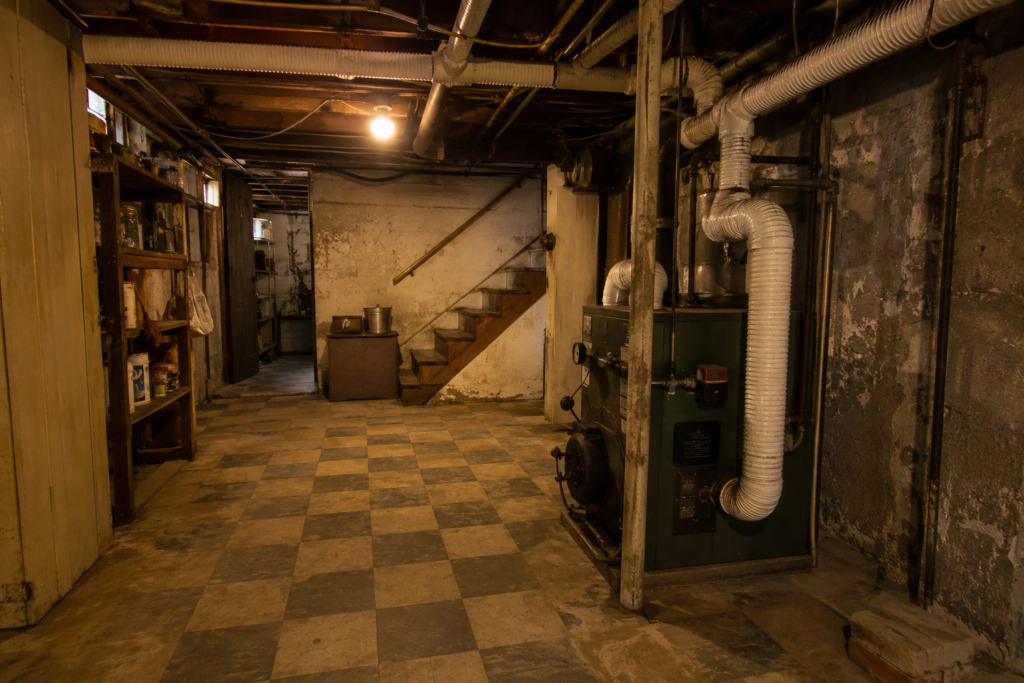
Older Johnston homes with original oil boilers or steam heating systems commonly have asbestos-wrapped pipes running through basements and utility areas. The insulation appears as a white, fibrous, corrugated wrap sometimes crumbling or falling away from pipes. This is called “friable” asbestos, and it is the most dangerous type. Crumbling pipe insulation releases fibers with no disturbance at all. If you see deteriorating wrap on pipes or around your furnace, call a certified inspector immediately do not touch it.
3. Popcorn (acoustic) ceilings — living rooms, bedrooms
Popcorn ceilings were sprayed onto virtually every new home built between the 1950s and late 1970s as a low-cost acoustic treatment and texture finish. The spray mixture frequently contained chrysotile asbestos fibers. In Johnston homes, these are found in nearly every room of houses built in this period. The risk spikes the moment you touch them scraping, sanding, or drilling through a popcorn ceiling sends fibers airborne instantly. Even painting can disturb them if the surface is already compromised. Testing is simple and inexpensive; skipping it is not worth the risk.
4. Vermiculite attic insulation
This one deserves special attention in Rhode Island. Vermiculite insulation a silver-gray, pebble-like loose fill was sold under the brand name Zonolite and blown into attics throughout New England from the 1940s through the 1980s. The vast majority of it came from a mine in Libby, Montana that was heavily contaminated with tremolite asbestos, one of the most aggressive forms. If your Johnston home has loose granular material in the attic that looks like gray pebbles or mica flakes, assume it contains asbestos until a certified inspector and lab confirms otherwise. Do not enter the attic, store items there, or attempt to remove it yourself.
5. Roof shingles and asbestos-cement siding
Asbestos-cement roofing shingles and exterior siding panels were widely used on Johnston homes through the 1970s. They look similar to standard asphalt shingles or fiber-cement siding but have a slightly different texture and tend to be heavier. When intact and painted, they pose minimal risk. The danger comes during re-roofing, siding replacement, or storm damage cutting, drilling, or breaking these materials releases fibers. If your home has its original exterior materials and you’re planning any exterior work, a siding or roof asbestos inspection should be your first call.
6. Joint compound (drywall mud) and drywall tape
This one catches Johnston homeowners completely off guard. Pre-1980 drywall itself is usually fine but the joint compound used to tape and finish drywall seams frequently contained asbestos. The same goes for patching compounds used for repairs. This means that even a wall that looks like plain drywall could have asbestos embedded in every taped seam and corner bead. When you sand these walls for repainting or cut into them for electrical work, you’re potentially sanding or cutting directly through asbestos-containing material. Never dry-sand walls in a pre-1980 Johnston home without testing first.
7. HVAC duct wrap and flexible duct connectors
Forced-air heating systems installed before 1975 frequently used asbestos-containing insulation to wrap ducts in basements and crawlspaces. Flexible connectors joining the furnace to the duct system were also commonly made with asbestos cloth. If your Johnston home still has its original ductwork, the insulation wrapping those ducts is suspect. Disturbing deteriorating duct insulation during HVAC servicing or replacement can release fibers throughout your entire home via the air supply system. If your HVAC contractor is planning work on original ductwork, request an asbestos inspection before they begin.
8. Fireproofing spray on structural steel and insulation board
In Johnston commercial-to-residential conversions, mill buildings, and any home with exposed steel beams, asbestos-containing fireproofing spray was applied directly to structural elements. It looks like a rough, lumpy gray coating on metal beams. Insulation board (also called millboard or Transite board) used around fireplaces, furnaces, and wood stoves also commonly contained asbestos. If you have a converted space or any original firebox surround materials, these should be part of any pre-renovation inspection scope.
9. Window glazing compound, caulk, and rope gaskets
Old-style window glazing putty the compound that holds glass panes in wooden window frames sometimes contained asbestos as a filler. Similarly, furnace door rope gaskets and some caulking compounds used around chimneys, pipes, and expansion joints were asbestos-based. These materials are often overlooked because they’re small and inconspicuous, but scraping old glazing or caulk as part of window replacement or chimney repointing can release fibers. If your Johnston home has original single-pane windows or a masonry chimney, flag these for inspection too.
What Johnston homeowners should do before any renovation
The single most important rule for any Johnston home built before 1980 is this: test before you touch. Rhode Island regulations require an asbestos survey before renovation or demolition work that disturbs suspect materials but beyond legal compliance, this is simply protecting yourself, your family, and your contractors.
Here is the right sequence of steps:
- Identify your home’s age and construction era. Any home in Johnston built before 1980 should be treated as potentially containing asbestos-containing materials in any of the locations listed above.
- Do not disturb suspect materials before inspection. Do not drill, sand, scrape, cut, or demolish any material that could contain asbestos until testing is complete. Even moving or dropping old floor tiles can be a risk.
- Schedule a certified pre-renovation asbestos inspection. A certified inspector will visually assess your property, take targeted bulk samples from suspect materials, and submit them to an accredited laboratory for analysis.
- Verify your inspector’s certification before hiring. Rhode Island requires asbestos inspectors to hold a current state license. You can check any inspector’s credentials through the Rhode Island Department of Health’s licensed asbestos inspector registry. it takes two minutes and protects you from unlicensed contractors who cannot legally sign off on inspection reports accepted by permit offices.
- Review your inspection report before work begins. Your certified inspector will provide a written report identifying any asbestos-containing materials found, their location, condition, and recommended action abatement, encapsulation, or safe management in place.
- If asbestos is found, follow the abatement pathway. Removal must be performed by a separate licensed abatement contractor. After abatement, post-abatement clearance testing confirms that fiber levels are within safe limits before the space can be reoccupied.
If you are not planning any renovation but are concerned about deteriorating materials in your home especially crumbling pipe insulation or a damaged popcorn ceiling an asbestos risk assessment can help you understand whether materials in place pose a risk and what, if anything, needs to be done.
Frequently asked questions
How do I know if my Johnston home has asbestos?
The only reliable way to confirm asbestos is a certified inspection followed by laboratory analysis of collected samples. Visual identification alone is never sufficient asbestos fibers are microscopic. If your Johnston home was built before 1980, schedule a professional asbestos inspection before any renovation or demolition work begins. Our team serves the entire Johnston 02919 area and surrounding communities.
Is asbestos dangerous if I leave it alone?
Asbestos-containing materials in good condition and left completely undisturbed are generally considered lower risk. The serious danger arises when materials are damaged, deteriorating, or disturbed during renovations releasing microscopic fibers into the air you breathe. That is precisely why pre-renovation testing is non-negotiable in any pre-1980 Johnston home. Crumbling materials, even without any work being done, should be assessed by a certified inspector promptly.
Do Rhode Island asbestos inspectors need to be licensed?
Yes. Rhode Island requires asbestos inspectors to hold a current state certification. Inspection reports used for renovation permits must be signed by a state-licensed inspector. Before hiring anyone, you can verify their certification directly through the Rhode Island Department of Health’s official asbestos inspector registry. AccuTest Asbestos Services is fully licensed and insured to conduct inspections throughout Johnston and Providence County.
What is the most common place asbestos is found in old Johnston homes?
In Johnston, the most frequently confirmed asbestos locations in pre-1980 homes are 9×9 inch vinyl floor tiles and their mastic adhesive, pipe and boiler insulation, and popcorn ceilings. Vermiculite attic insulation is also extremely common in New England homes from this era given the widespread use of Zonolite brand product, which was heavily contaminated with asbestos from its source mine.
Can I renovate my Johnston home if it might have asbestos?
Not without a pre-renovation asbestos inspection first. Rhode Island regulations require an asbestos survey before renovation or demolition work that will disturb suspect materials. A certified inspector identifies all hazardous materials and provides a written report you can submit along with your renovation permit application. Skipping this step creates legal liability and serious health risk for you and your contractors.
Get a certified asbestos inspection in Johnston, RI
Our state-certified inspectors serve Johnston and all surrounding Rhode Island communities. We deliver accurate lab-backed results, fast with no hidden fees and clear written reports.Book your free quote today Or call us directly: (844) 334-7395
Leave a Reply