
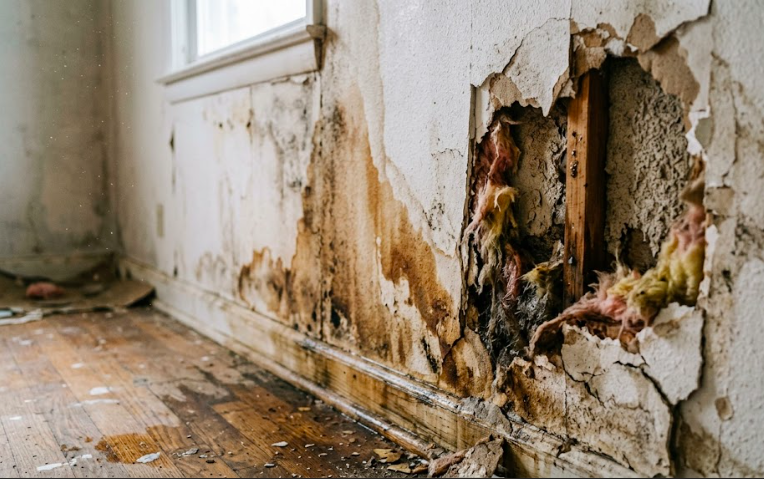
When floodwater recedes, most homeowners focus on the obvious damage: soaked carpet, ruined drywall, waterlogged furniture. What many don’t realize is that the cleanup itself can introduce a far more serious and invisible hazard asbestos.
If your home was built before 1980, there’s a real chance that some of the materials damaged by the flood contain asbestos. Disturbing those materials during cleanup, demolition, or even basic drying efforts can release microscopic fibers into the air your family breathes. Unlike water damage, asbestos exposure doesn’t show up immediately its health effects can take decades to surface, which is exactly why it’s so often overlooked in the rush to dry out a flooded home.
This guide explains where asbestos hides in flood-damaged homes, why floodwater makes it more dangerous, and the specific steps you should take before any cleanup crew touches a wall.
Why Floods Make Asbestos More Dangerous
Asbestos is only hazardous when its fibers become airborne and are inhaled. Undisturbed asbestos-containing material that’s in good condition generally poses minimal risk. Flooding changes that equation in two ways.
First, water itself can carry asbestos fibers. Floods are capable of disturbing both manufactured asbestos materials and naturally occurring asbestos deposits, carrying fibers into homes, yards, and local water sources as the water moves through a community.
Second, and more relevant for homeowners the cleanup process itself is the real danger. Tearing out soaked drywall, ripping up flooring, removing wet insulation, or beginning demolition on a flood-damaged structure are exactly the kinds of disturbances that release asbestos fibers into the air. The EPA has stated plainly that anyone working on demolition, removal, and cleanup of building debris needs to be aware of any asbestos and handle asbestos-containing materials properly a warning aimed directly at homeowners eager to start gutting a flooded house themselves.
Where Asbestos Commonly Hides in Older Homes
If your home was constructed before 1980, asbestos may be present in any of the following materials all of which are commonly damaged or removed during flood cleanup:
- Vinyl floor tiles, sheet flooring backing, and the adhesive/mastic underneath-frequently soaked and pulled up first during water damage cleanup
- Attic and wall insulation, especially vermiculite insulation-a pebbly, lightweight material resembling small packing peanuts or popcorn, usually light brown or gold in color
- Drywall joint compound and wall-patching products-disturbed constantly during demolition of water-damaged walls
- Pipe insulation-often wrapped around plumbing in basements and crawlspaces, areas most exposed to flooding
- Textured ceiling and wall coatings
- Roofing and siding shingles
A 1984 EPA study limited to residential, commercial and public buildings found that about three-quarters of buildings nationally had asbestos-containing thermal system insulation, and over a quarter of buildings contained sprayed-on or troweled-on asbestos-containing surfacing material figures that make clear just how common these materials still are in older housing stock.
The problem is that you generally can’t tell whether a material contains asbestos just by looking at it unless it’s labeled. The standard guidance from environmental health agencies is simple: if in doubt, treat the material as if it contains asbestos and leave it alone.
The Critical Mistake: Rushing to Demolish or Dry Out a Flooded Home
After a flood, the instinct is to move fast wet materials breed mold within 24 to 48 hours, and every hour of delay feels costly. But moving fast on demolition before an asbestos inspection is exactly the mistake that turns a water damage problem into a long-term health hazard.
It is not recommended that homeowners remove suspected asbestos materials themselves. Improper removal can result in unnecessary exposure and can cause asbestos fibers to become airborne, potentially contaminating the entire home rather than containing the problem to one damaged area.
Material that is in good condition and won’t be disturbed should be left alone entirely. But flood-damaged material is, by definition, already disturbed saturated drywall, buckled flooring, and waterlogged insulation are unstable and prone to breaking apart further during normal handling. This is precisely the scenario where professional testing matters most.
What Homeowners Should Actually Do First
Before any drywall comes out, before any flooring gets ripped up, and before any contractor starts hauling debris to the curb, take these steps:
1. Treat all pre-1980 building materials as suspect. If your home was built before 1980 and materials were damaged or will be disturbed during flood cleanup, assume asbestos may be present until testing proves otherwise.
2. Do not dry-sweep, sand, cut, or forcibly remove damaged materials. If wet materials must be moved at all before testing, they should be wetted further (not dried) to keep any fibers from becoming airborne dry handling is what releases fibers into the air.
3. Get a licensed inspection before demolition begins. A certified asbestos inspector can sample damaged materials and send them to an accredited laboratory. Homeowners should not attempt to take their own samples improper sampling can be more hazardous than leaving the material untouched, since incorrect technique can release more fibers than professional sampling would.
4. If asbestos is confirmed, hire a licensed abatement contractor. Improper removal of asbestos can also cause the asbestos fibers to become airborne and contaminate the entire home, which is why generally accepted guidance calls for a licensed asbestos abatement contractor to handle removal rather than a general contractor or restoration crew.
5. Request written documentation. Before work begins, get a written contract specifying the scope of work, cleanup procedures, and applicable regulations. After the work is complete, an independent air-testing contractor can confirm there’s no elevated asbestos level remaining in the air.
For full federal guidance, the EPA’s official flooding and asbestos guidance outlines exactly which professional certifications to look for and how asbestos hazards intersect with broader flood cleanup procedures. On the regulatory side, OSHA’s standard interpretations for asbestos in disaster remediation confirm that contractors working in flood-damaged homes built before 1980 are required to assess for asbestos-containing materials before disturbing them.
Why This Matters Even More in Older Industrial Cities
Cities with a large stock of pre-1980 housing face this risk far more often than newer suburban developments. Akron, Ohio is a useful example: the city’s housing stock is dominated by older homes built during its industrial boom decades, and Akron has its own documented flood history along the Little Cuyahoga and Tuscarawas River basins, including major flood events that damaged residential neighborhoods. In a city where aging housing stock and flood risk intersect, asbestos testing before cleanup isn’t a precaution it’s a necessity.
Homeowners in Northeast Ohio dealing with flood damage in older properties should treat water damage restoration and asbestos testing as two steps in the same process, not two separate problems. If you’re located in that region, water damage restoration in Akron, Ohio is handled by local specialists experienced in coordinating drying and structural restoration around hazardous material protocols common in the area’s older housing stock.
What Happens If You Skip This Step
Skipping asbestos testing doesn’t just risk your health it can also derail your insurance claim and resale value. Demolition or cleanup performed without proper asbestos protocols can:
- Trigger code violations if discovered during inspection or permitting
- Void portions of homeowner’s insurance coverage tied to improper remediation procedures
- Expose contractors and household members to fibers with no safe exposure threshold, since there is no known safe level of asbestos exposure
- Create liability if the home is sold later and undisclosed asbestos contamination is discovered
None of this is meant to cause panic the large majority of flood cleanups proceed safely when homeowners take the right first step. But that first step has to be testing, not demolition.
Our Recommended First Move
If your home was built before 1980 and has sustained flood or water damage, don’t start tearing out materials yet. Our team provides asbestos testing and inspection services specifically for flood-damaged properties, working alongside your water damage restoration crew to make sure testing happens before not after materials are disturbed.
If testing confirms asbestos-containing materials, we also provide licensed asbestos abatement and specialized vermiculite insulation removal to safely clear the hazard so restoration work can proceed.
Schedule an inspection before your next cleanup step it’s the single most important call you can make after a flood in an older home.
Leave a Reply